Taha Ali
 Healthy weight loss is not about skipping meals or following extreme diets. Instead, it is about choosing the right foods, eating balanced meals, and supporting the body with essential nutrients. When food choices are aligned with proper nutrition, weight balance becomes more natural and sustainable.
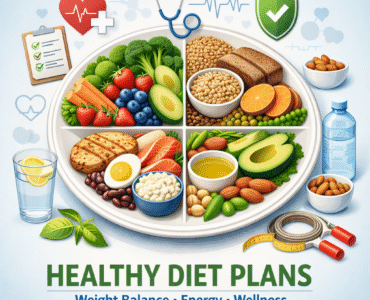
Moreover, as explained in our previous guides—Complete Healthy Diet Plans Guide for Long-Term Wellness, Weight Balance, and Daily Energy and Healthy Recipes for Breakfast, Lunch, and Dinner (Complete Daily Guide)—long-term results depend on food quality, nutrient density, and consistency rather than restriction.
This article explores foods that actively support healthy weight loss, explains why they work, and shows how to include them in your daily diet.
Understanding Food-Based Healthy Weight Loss
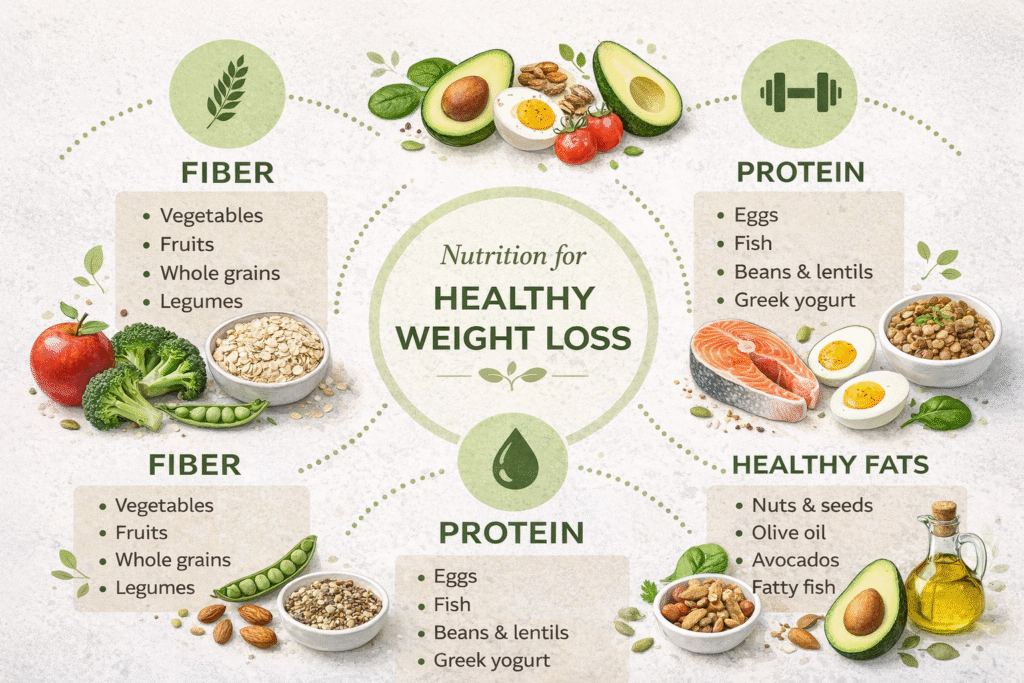
First and foremost, healthy weight loss happens when the body receives adequate nutrients while maintaining balanced energy intake. Rather than focusing on eating less, a smarter strategy is eating better-quality foods that:
- Increase fullness
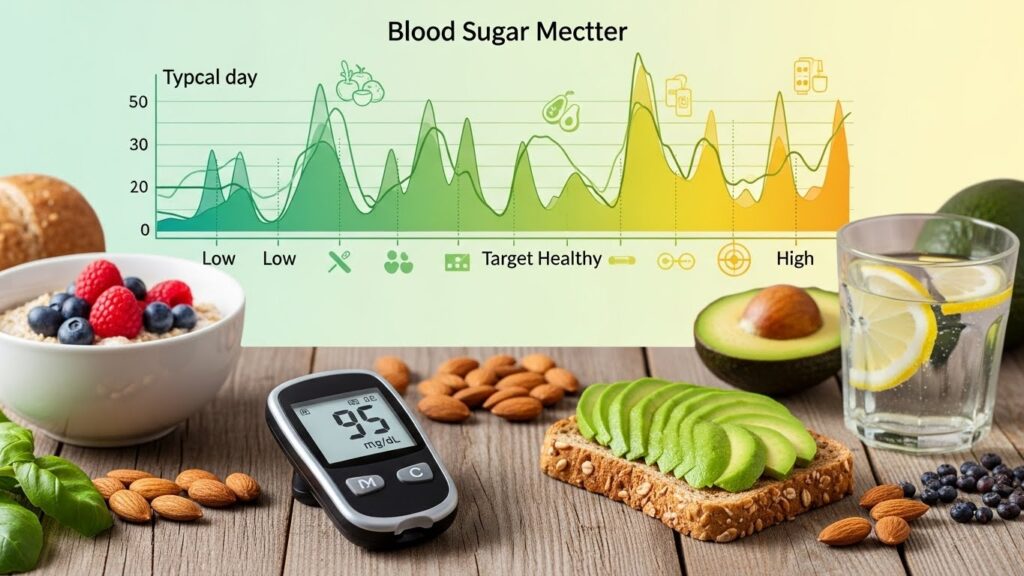
- Stabilize blood sugar
- Support metabolism
- Reduce unnecessary cravings
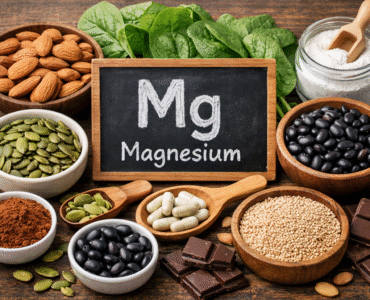
Additionally, essential minerals—such as magnesium, discussed in our article Magnesium Supplement Benefits: Uses, Dosage & Side Effects—play a vital role in energy production and muscle function, which indirectly supports healthy body weight.
Key Food Groups That Support Healthy Weight Loss
1️⃣ High-Fiber Foods (Fullness & Digestion Support)
Fiber-rich foods slow digestion and help you feel full longer. As a result, they naturally reduce overeating.
Examples:
- Vegetables
- Fruits
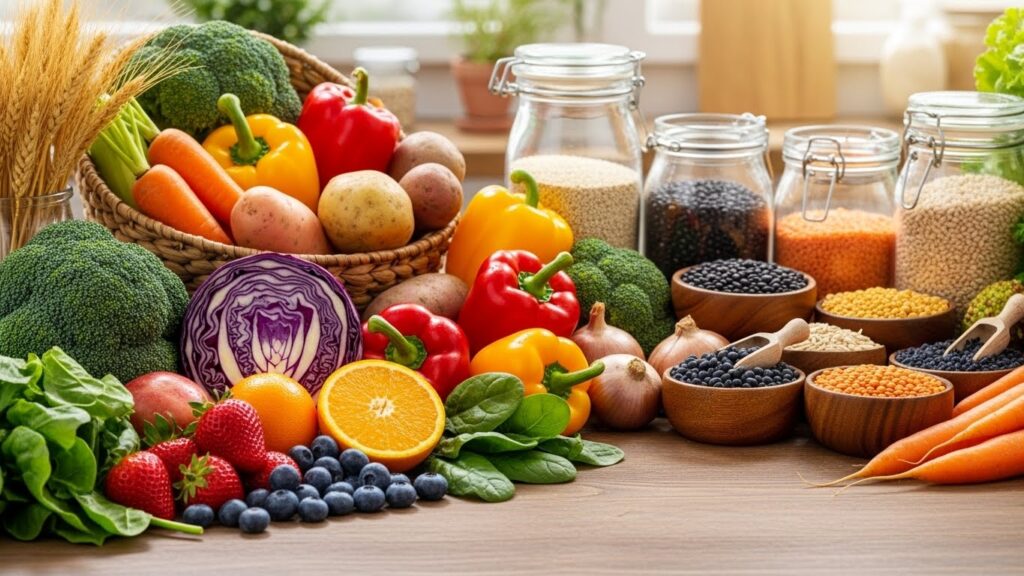
- Whole grains
- Legumes
Fiber Benefits Table
| Food Source | Fiber per 100g | % Daily Fiber Need* |
|---|---|---|
| Oats | 10.1 g | 40% |
| Lentils | 7.9 g | 32% |
| Apples | 2.4 g | 10% |
| Broccoli | 2.6 g | 11% |
Based on an average recommended intake of 25–30g/day.
2️⃣ Protein-Rich Foods (Muscle & Metabolism Support)
Protein helps maintain muscle mass, supports metabolism, and keeps hunger under control.
Healthy Protein Sources:
- Eggs
- Beans & lentils
- Fish
- Yogurt
- Lean poultry
Protein Contribution Table
| Food | Protein per 100g | % Daily Protein Need* |
|---|---|---|
| Eggs | 13 g | 26% |
| Greek Yogurt | 10 g | 20% |
| Chickpeas | 9 g | 18% |
| Fish (average) | 20 g | 40% |
*Based on a 50g/day reference intake.
Furthermore, pairing protein with fiber improves satiety and energy levels throughout the day.
3️⃣ Magnesium-Rich Foods (Energy & Metabolic Balance)
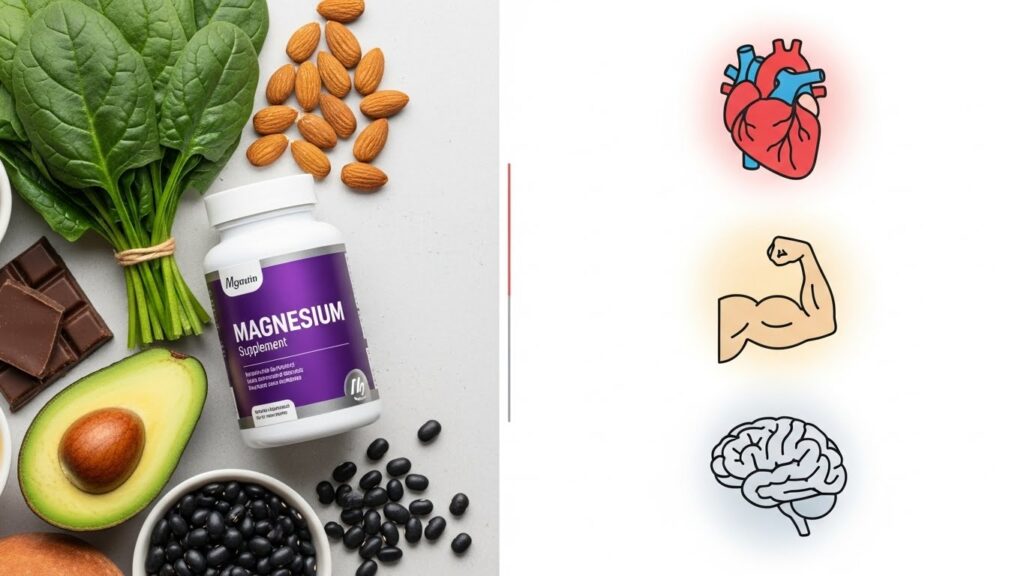
Magnesium is often overlooked, yet it supports energy production, muscle function, and blood sugar balance. As explained in our magnesium guide, deficiency may lead to fatigue and reduced activity levels.
Magnesium-Rich Foods Table
| Food | Magnesium (mg/100g) | % Daily Requirement* |
|---|---|---|
| Spinach | 79 mg | 20% |
| Almonds | 270 mg | 67% |
| Pumpkin Seeds | 262 mg | 65% |
| Whole Wheat | 138 mg | 35% |
Based on ~400 mg/day recommendation.
➡️ As a result, magnesium-rich foods complement healthy diet plans and support daily energy.
4️⃣ Healthy Fats (Hormonal & Appetite Balance)
Contrary to popular belief, healthy fats are essential for weight management. They help regulate hormones and promote fullness.
Healthy Fat Sources:
- Nuts & seeds
- Avocados
- Olive oil
- Fatty fish
Healthy Fat Comparison Table
| Food | Healthy Fats | Key Benefit |
|---|---|---|
| Olive Oil | Monounsaturated | Heart & appetite health |
| Avocado | Fiber + fat | Long-lasting fullness |
| Walnuts | Omega-3 | Metabolic support |
➡️ Meanwhile, combining fats with vegetables improves nutrient absorption.
5️⃣ Low-Glycemic Carbohydrates (Stable Energy)
Not all carbohydrates cause weight gain. Whole, unprocessed carbs provide steady energy and reduce cravings.
Best Choices:
- Brown rice
- Oats
- Sweet potatoes
- Quinoa
Carb Quality Table
| Carb Type | Glycemic Impact | Weight Support |
|---|---|---|
| Oats | Low | ✔ Supports fullness |
| White Bread | High | ❌ Energy crash |
| Quinoa | Low | ✔ Balanced nutrition |
How These Foods Fit Into Daily Meals
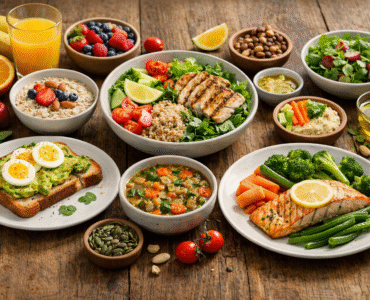
According to our Healthy Recipes for Breakfast, Lunch, and Dinner Guide, structuring meals properly is essential.
Daily Meal Distribution (Recommended)
| Meal | % of Daily Calories | Focus |
|---|---|---|
| Breakfast | 25% | Fiber + protein |
| Lunch | 35% | Balanced nutrients |
| Dinner | 25% | Light & nutrient-dense |
| Snacks | 15% | Fruits, nuts |
This balanced approach supports energy while avoiding overeating.
Common Mistakes to Avoid
Despite eating healthy foods, some habits can slow progress:
- Skipping meals
- Avoiding all fats
- Relying on supplements alone
- Ignoring mineral intake
➡️ Instead, whole foods plus minerals like magnesium create sustainable results.
Final Thoughts
In conclusion, healthy weight loss is best supported by fiber-rich foods, quality protein, healthy fats, low-glycemic carbs, and essential minerals. When these foods are combined with structured meal plans and consistent habits, the body naturally moves toward balance.
For deeper understanding, explore:
- Magnesium Supplement Benefits: Uses, Dosage & Side Effects
- Healthy Recipes for Breakfast, Lunch, and Dinner (Complete Daily Guide)
- Complete Healthy Diet Plans Guide for Long-Term Wellness, Weight Balance, and Daily Energy
Together, these guides form a complete, science-based approach to long-term wellness.